
Daffodils
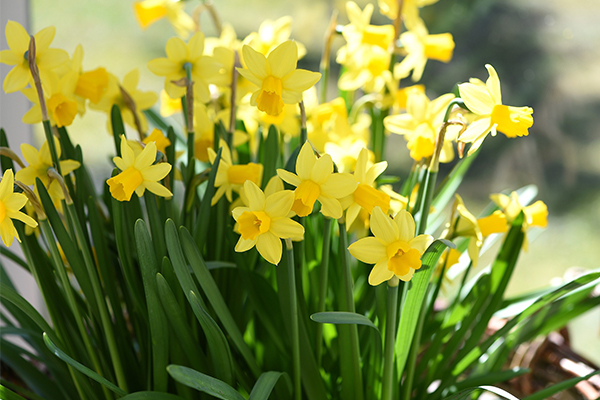
Daffodils are one of the easiest and most dependable spring bulbs you can grow.
These blooms thrive in formal beds, mixed perennial gardens and naturalized woodland areas. Once planted and established, most daffodil varieties multiply over time, giving you a larger display each spring.
Getting to Know Daffodils
All daffodils belong to the genus Narcissus. There are many types, grouped by flower shape and number of blooms per stem. Most varieties make excellent cut flowers and many are fragrant.
Popular Types of Daffodils
- Large-Cup and Trumpet Daffodils
The classic spring favorite with bold white, yellow, gold, orange and even pink blooms. These grow 14 to 20 inches tall and bloom early to mid-spring, making them ideal for large, formal plantings. - Small-Cup Daffodils
These varieties have smaller centers with delicate petals. They grow 14 to 18 inches tall and bloom from early to late spring. They work beautifully in both formal landscapes and naturalized plantings. - Double and Split-Corona (Butterfly) Daffodils
These unique blooms feature multiple layers of petals instead of a single cup. Growing 12 to 18 inches tall, they bloom mid to late season and are often fragrant. Because their blooms can be heavy, they grow best in protected areas. - Multi-Flowered Daffodils
These smaller, fragrant varieties produce several blooms per stem and grow 12 to 16 inches tall. They’re perfect for naturalizing and blending with other bulbs.
Where to Plant Daffodils
Daffodils look best when planted in clumps or large drifts rather than single rows. They pair beautifully with spring shrubs and perennials and can be tucked among later-emerging plants like hostas and daylilies, which help hide fading foliage.
How to Plant Daffodil Bulbs
Plant bulbs in the fall once the soil begins to cool, typically from late September through November.
- Choose full sun or partial shade with well-drained soil.
- Plant bulbs pointed-end up at a depth about twice the bulb’s height.
- Plant in groups of at least 10 bulbs for a natural appearance.
- Add granular fertilizer during planting if desired.
- Water during dry fall weather to help bulbs establish roots.
Planting Live Daffodil Plants
Live potted daffodils are popular spring gifts, especially around holidays. After blooms fade indoors, they can be planted outside. Simply plant them like bulbs and allow the foliage to remain intact so the bulb can store energy for the following year.
Caring for Daffodils After Bloom
Daffodils are especially low maintenance and naturally resistant to deer, mice and voles.
- Remove faded flowers but leave stems and foliage intact.
- Allow leaves to yellow and die naturally, which usually takes about four weeks.
- Avoid mowing daffodil foliage until it fully yellows.
- Fertilize annually in fall or early spring for best results.
Bulbs that were forced to bloom indoors can be planted outside but may take a year or two to rebloom. Paperwhite daffodil bulbs, however, are typically discarded after blooming since they rarely perform well outdoors.
Moving and Dividing Daffodils
Why Timing Matters
After daffodils bloom, their foliage plays a crucial role in next year’s flowers. The leaves collect sunlight and convert it into energy that replenishes the bulb. Removing or damaging the foliage too early can reduce flowering the following season.
When to Transplant Daffodils
Spring is the best time to transplant daffodils, but patience is important. Wait about eight weeks after blooming ends before digging them up. This allows the foliage enough time to recharge the bulb.
How to Transplant Daffodils
Follow these simple steps to ensure success:
- Deadhead spent flowers after blooming, but leave foliage untouched.
- Carefully dig around the bulb clump using a shovel or garden fork.
- Lift bulbs gently, trying to keep foliage and roots intact.
- Replant bulbs immediately in their new location using normal planting depth guidelines.
- Water after transplanting to help bulbs settle into their new space.
Tips for Stronger Blooms Next Year
- Handle bulbs gently to avoid damage.
- Replant bulbs as soon as possible to prevent them from drying out.
- Allow foliage to remain until it turns yellow naturally.
- Apply fertilizer in fall or early spring to encourage vigorous growth.
Signs Your Daffodils May Need Dividing
Over time, daffodil bulbs multiply underground. If blooms become smaller or less frequent, overcrowding may be the cause. Dividing and transplanting helps restore healthy flowering and spreads color throughout your landscape.