
Rabbits
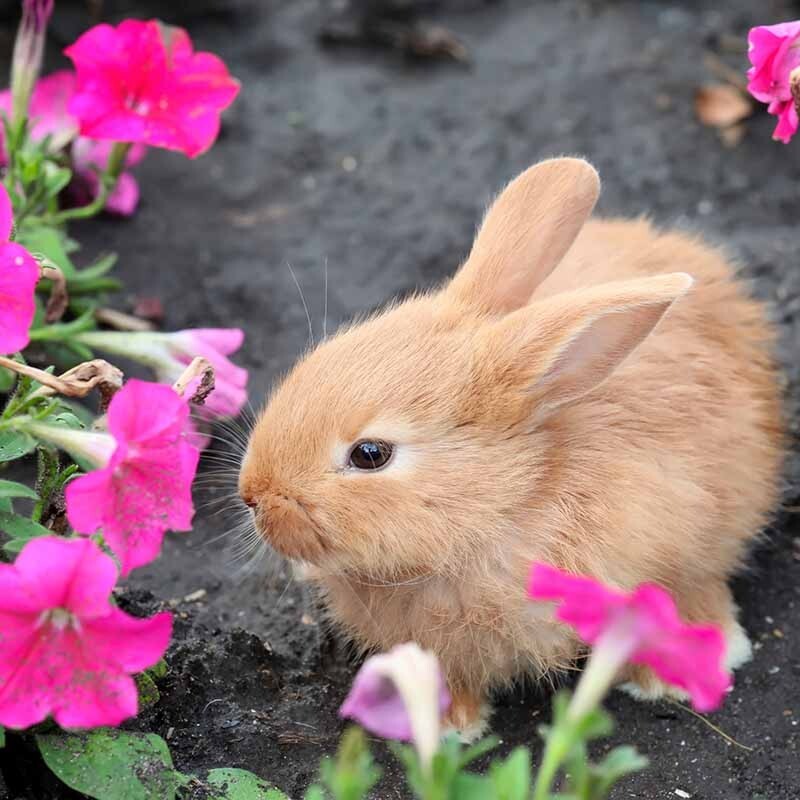
Battling Bunnies in the Garden
What are you supposed to do when a cute little bunny family decides your petunia bed is the dinner buffet?
While rabbits may be adorable, their appetite for tender plants can quickly test a gardener’s patience. The good news is there are plenty of ways to discourage rabbit damage without harming a hair on the hare. Before jumping into solutions, it helps to understand what you’re dealing with.
Knowing the Enemy
Most gardeners are familiar with the eastern cottontail rabbit, but identifying rabbit damage isn’t always so obvious.
Rabbits leave behind sharp, angled cuts on stems and branches thanks to their strong, chisel-like teeth. This is very different from the ragged tears left by deer. They also tend to nibble plants down to ground level, unlike groundhogs, which sample a little of everything.
The most reliable giveaway is evidence left behind: small, round pellets scattered near the damaged plants. If you see those, you can be fairly certain rabbits are the culprits.
Rabbits may not cause as much damage individually as deer or groundhogs, but they make up for it in numbers. They reproduce quickly, often producing multiple litters each year.
Young rabbits spend their first couple of weeks hidden in shallow ground nests before venturing out to feed, which explains how populations can seem to explode overnight.
What’s on the Rabbit Menu
Rabbits aren’t especially picky and preferences can vary by location. While classic favorites include carrots, lettuce, peas, beans, beets and strawberries, many gardeners report rabbits happily dining on tulips, petunias, dianthus and sunflower shoots.
A smart strategy is to observe what rabbits target in your yard and plant less of those favorites while increasing plants they tend to ignore. In winter, rabbits can also damage young trees and shrubs by chewing bark and stems, especially when green food sources are scarce.
On the plus side, rabbits do consume grass, clover, dandelions and other lawn weeds, making part of their diet garden-friendly. They typically feed from late afternoon through early morning and avoid the heat of midday.
Battling the Bunnies
Physical barriers are one of the most reliable deterrents. A low chicken-wire fence, 2 to 3 feet tall with a few inches buried underground, is usually enough to stop rabbits. They can jump and dig a little, but they’re not expert climbers or deep diggers.
If rabbits are only targeting young plants, floating row covers can be very effective. Once plants mature and become less appealing, the covers can be removed.
Exploit Their Weakness
Rabbits are naturally timid, so fear-based deterrents can work well, especially when rotated frequently. Predator urine, such as fox urine, taps into their natural survival instincts. Commercial repellents like Liquid Fence, made from garlic and putrescent egg solids repel rabbits through smell and taste and should be reapplied after heavy rain.
Other deterrents include blood meal, human or pet hair, lime, hot pepper sprays and garlic solutions. Reflective objects like pie tins can startle rabbits when they move in the breeze. Fake snakes can also help, especially if moved around regularly.
Because rabbits quickly become accustomed to repeated tactics, switching methods every few weeks improves results. Pets such as dogs and outdoor cats also act as natural deterrents.
Rabbits also dislike walking on prickly or uneven surfaces. Lining garden beds with thorny prunings from roses or raspberries can help protect vulnerable areas.
Try Trapping
If repellents and fencing aren’t enough, live trapping is another option. Use a humane live trap placed in a sheltered area where rabbits already travel. Apples, carrots, cabbage, celery or dried corn make good bait. Be sure to check local regulations and contact your state game commission for guidance on legal relocation practices.
Also Worth Trying
Reducing cover can make your yard less inviting. Remove brush piles, tall weeds and other hiding spots where rabbits might nest. Some gardeners also plant a “sacrificial garden” filled with rabbit favorites away from the main garden. The hope is that rabbits will fill up there and leave prized plants alone.
With a mix of observation, prevention and persistence, it’s possible to share your landscape with wildlife while still enjoying a thriving garden.