
Azaleas, Mountain Laurel, & Rhododendron
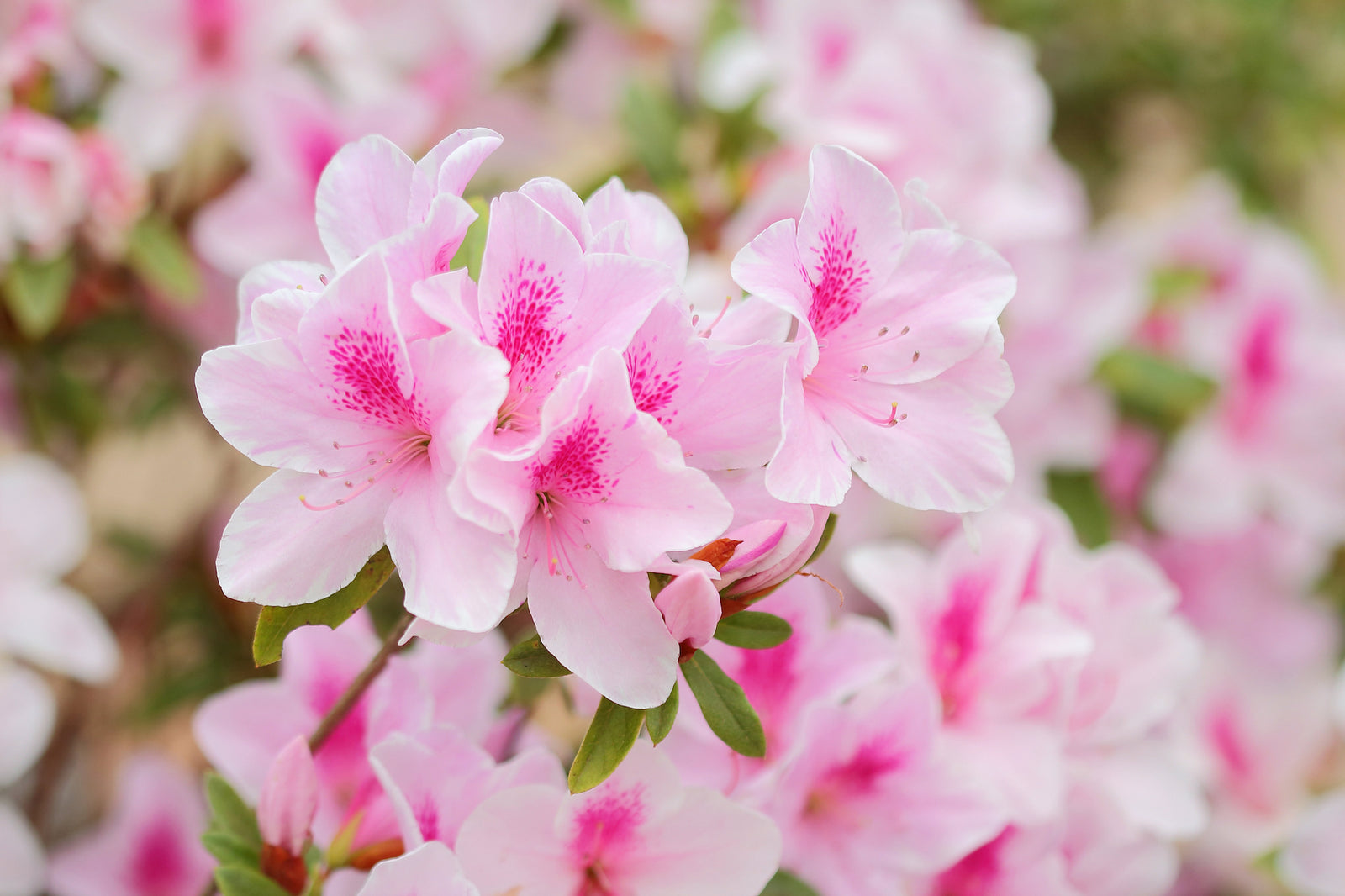
Azaleas, Mountain Laurel and Rhododendrons are closely related shrubs that thrive under similar conditions. With the right care, they’ll reward you with beautiful blooms and healthy growth year after year. Here’s what you need to know:
Planting & Transplanting
Choose a spot that offers protection from strong winds and harsh afternoon sun. Around your home, east- or north-facing areas are ideal. In more open spaces, aim for a mix of sun and shade.
These plants can be transplanted any time of year with proper care, but early spring or fall is best when temperatures are cooler and soil moisture is higher.
Planting tips:
- Plant at the same depth as in the nursery container
- Dig a hole about twice as wide as the root ball
- Improve your soil with organic matter like peat moss or compost
- Set the root ball slightly above ground level
- Water as you fill the hole to remove air pockets
If planting in fall, consider adding a burlap barrier for winter protection.
Soil Matters
Well-drained, organic-rich soil is key.
- Avoid heavy, waterlogged clay soils (use raised beds if needed)
- Do not plant in alkaline (lime-heavy) soil
- Be cautious near new construction where lime or cement may affect soil
Adding compost, leaf mold or peat moss will improve most soil types and help roots establish more easily.
Fertilizing
Skip lime or alkaline fertilizers. Instead, use a product formulated for acid-loving plants, like Holly-tone, following label directions.
Occasionally, plants may benefit from added nutrients like iron or magnesium to maintain deep green foliage.
Watering Needs
These plants have shallow roots, so consistent moisture is important, especially during summer.
- Water regularly, but avoid soggy soil
- Plants under roof overhangs may need water year-round
- Well-drained soil is essential to prevent root issues
Mulching & Care
Avoid heavy digging around these plants—their roots are close to the surface.
Instead:
- Apply mulch (bark, straw, peat moss, etc.) to retain moisture and control weeds
- Keep mulch a few inches away from the base of the plant
If mulch is mixed into the soil later, add a bit of nitrogen to help it break down.
Winter Protection
Cold damage can happen, especially if plants aren’t fully dormant.
To help:
- Avoid heavy fertilizing after mid-July
- Protect plants from strong winter winds and sun
Plant health, variety and weather conditions all play a role in winter survival.
Pruning
Most of the time, minimal pruning is needed if plants are spaced properly.
- Remove dead or damaged branches anytime
- Prune right after flowering to protect next year’s blooms
- Deadhead (remove spent flowers) annually to keep plants tidy
Common Problems
Like most plants, these shrubs can face pests, diseases or nutrient deficiencies.
Watch for:
- Discolored leaves
- Unusual spots or damage
- Poor growth
Catching issues early makes treatment easier. If you're unsure, it’s always a good idea to consult a gardening expert for advice.
With the right location, soil and care routine, these classic flowering shrubs can thrive and become a standout feature in your landscape.