
Japanese Beetles
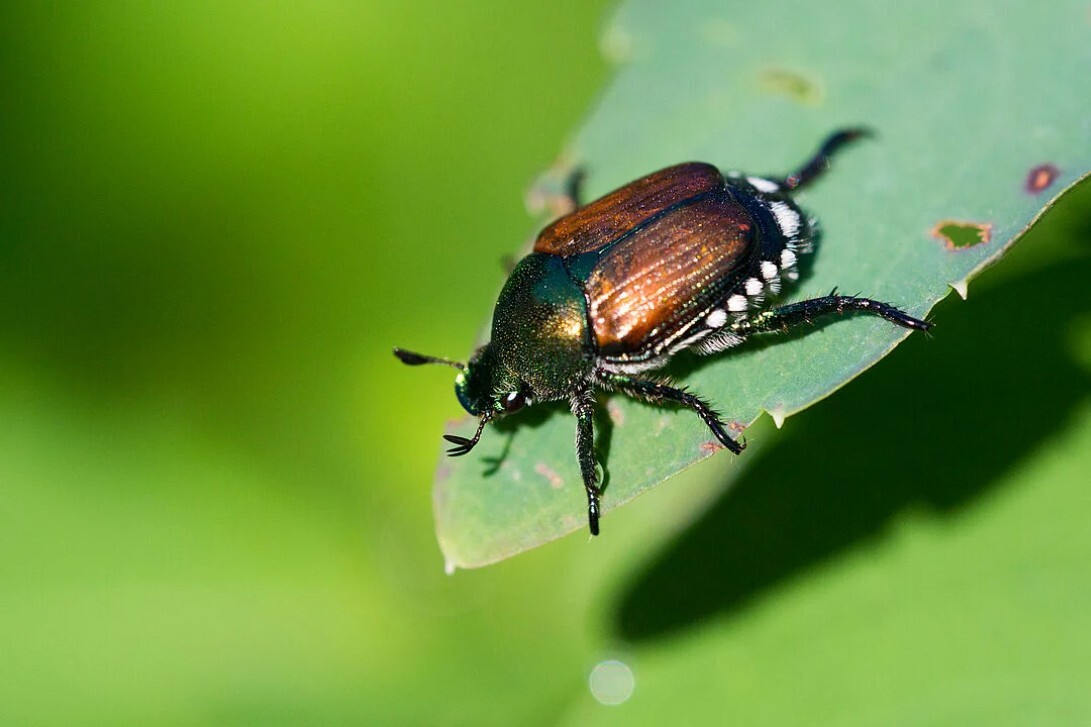
Japanese Beetles: Identification, Damage and Control
Japanese beetles are highly destructive garden pests that were first discovered in the United States in New Jersey over 80 years ago. Unlike in their native Japan, where natural predators control their numbers, Japanese beetles can cause serious damage to plants and lawns across Pennsylvania.
How to Identify Japanese Beetle Damage
Adult beetles feed in groups on hundreds of plant varieties, including roses, grapes, fruit trees and ornamentals. They chew the tissue between leaf veins, creating a lace-like or “skeletonized” appearance. They typically start feeding at the top of plants, especially those in full sun.
Their larvae, known as grubs, live in the soil and feed on grass roots. Damaged lawns often develop large brown patches that can easily be pulled up, similar to lifting a loose carpet.
Life Cycle and Management
Adult beetles emerge in early summer and lay eggs in soil during July. Grubs hatch within weeks and feed on turf roots through fall, which is when most lawn damage occurs.
Management is most effective when targeting young grubs in late summer. Monitoring plants regularly and treating infestations early can help reduce damage and protect lawns and landscapes.
Recommended Control Methods:
Japanese Beetle Traps:
For Maximum effectiveness, use the suggested number of traps listed below:
Less than 1/8 Acre: 1 trap
1/8 to 1/4 Acre: 2 traps
1/4 to 1/2 Acre: 3 traps
1/2 Acre: 4 traps
Over 1/2 Acre: Place traps every 150' to 200 ' along perimeter
Biological:
Milky Spore is the common name for spores of the bacterium Bacillus popillae. Milky spore disease builds up in turf slowly (over 2-4 years) as grubs ingest the spores, become infected and die, each releasing 1-2 billion spores back into the soil.
Chemical Control:
Scotts® GrubEx® Season-Long
Kills grubs before they damage your lawn. Just one application protects from grubs all season long.
Shop Scotts® GrubEx® Season-Long