
Norfolk Island Pine
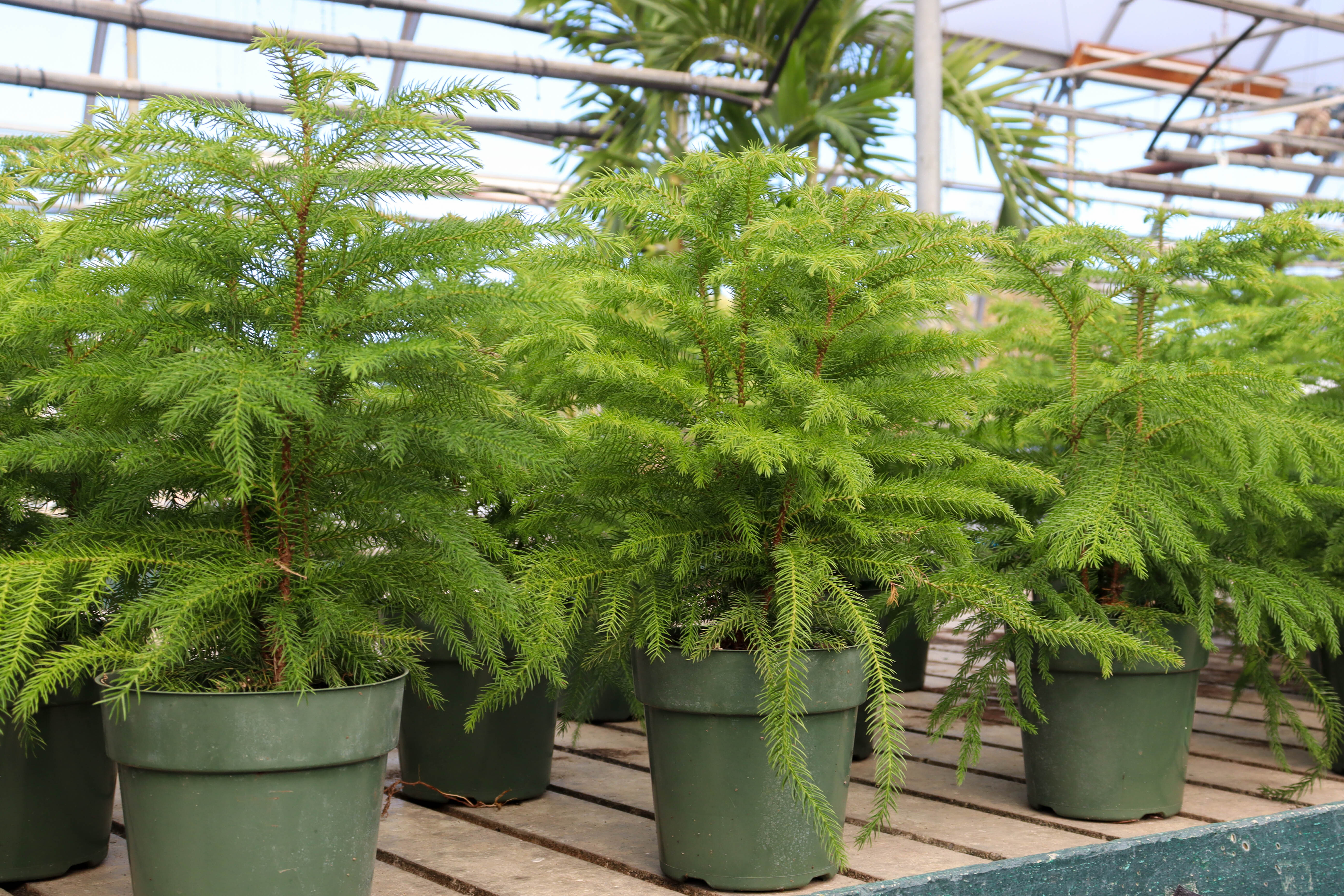
Norfolk Island Pines are loved for their soft needles and perfectly layered branches. While they’re often sold as festive holiday plants, they can make beautiful year-round houseplants with the right care.
Here’s a simple guide to keeping your Norfolk Island Pine healthy and thriving.
What Makes Norfolk Island Pines Unique
Norfolk Island Pines are easy to recognize by their flat, symmetrical branches and soft green needles. In the wild, they grow into tall trees on Norfolk Island in the South Pacific.
Indoors, they grow much more slowly, usually about 3–6 inches per year.
Watering
Getting the watering routine right is one of the most important parts of Norfolk Pine care.
- Allow the top of the soil to dry slightly between waterings.
- Never let the plant sit in soggy soil or standing water.
- Yellow needles that fall off easily can be a sign of overwatering.
When possible, water thoroughly in a sink or tub, allowing excess water to drain completely before placing the plant back.
Humidity
Norfolk Island Pines prefer humid environments.
If the air is too dry, the lower branches may turn brown or brittle and drop needles. Unfortunately, once needles dry out, they will not regrow.
To help maintain healthy foliage:
- Keep a consistent watering routine
- Avoid placing the plant near heating vents or drafts
- Increase humidity if the air in your home is very dry
Light & Temperature
Norfolk Island Pines grow best in bright light.
Ideal lighting includes:
- Morning or evening sun from east, north or west-facing windows
- Bright, filtered light near a south-facing window
They also prefer slightly cooler temperatures than many houseplants:
- Daytime: 68–72°F
- Night: 50–55°F
They can tolerate temperatures between 45–85°F, but sudden changes should be avoided.
Soil & Repotting
Norfolk Pines grow best in well-draining soil rich in organic matter. Potting mixes designed for African violets often work well.
Repot your plant every 3–4 years or when roots begin to fill the pot.
Pruning
Norfolk Island Pines naturally grow in a balanced, upright shape, so pruning should be minimal.
Avoid cutting the main growing tip, as this can permanently change the plant’s shape. Only remove dry or dead lower branches when needed.
Fertilizing
Feed established plants every 3–4 months with a balanced houseplant fertilizer.
If your plant is new or recently repotted, wait 4–6 months before fertilizing to allow the roots to settle.
A Plant for Every Season
Norfolk Island Pines aren’t just for the holidays; they’re long-lasting houseplants that add greenery and structure to any room.
With bright light, consistent watering and the right humidity, your Norfolk Pine can thrive indoors for years while bringing a touch of nature into your home.