
Parsley
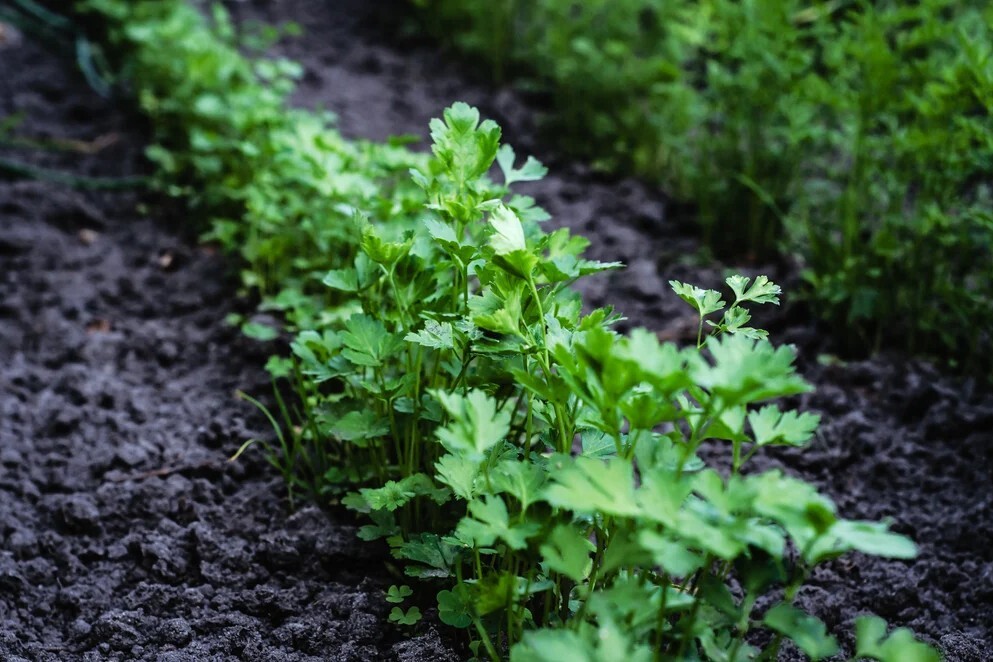
Parsley (Petroselinum crispum) is a member of the carrot family and far more than a decorative sprig on a dinner plate. Used by the ancient Greeks and Romans for both medicine and cooking, parsley remains one of the most nutritious herbs you can grow.
Rich in vitamins A and C, along with calcium and other nutrients, parsley is also high in chlorophyll, making it a natural breath freshener. Its flavor is enjoyed worldwide. From Greek sauces to Spanish salsa verde and Japanese tempura, parsley plays a starring role in many cuisines.
There are two main types:
- Curly parsley – dark green with tightly ruffled leaves
- Italian (flat-leaf) parsley – brighter green, more feathery and often considered stronger in flavor
Both are excellent for soups, stews, sauces, salads and garnishes.
Although parsley is technically a biennial (living two seasons), most gardeners grow it as an annual. If left to overwinter, it will bloom in its second year with delicate greenish-yellow flowers that attract beneficial insects, but flowering can make the leaves taste bitter.
Growing Parsley
Parsley thrives in full sun in cooler climates and appreciates some afternoon shade in warmer regions. It prefers moderately rich, moist, well-drained soil with a slightly acidic pH (6.0–7.0). Because it develops a taproot, loose soil is important.
Starting from Seed
Parsley seeds are slow to germinate, often taking 2–4 weeks. Sow them ¼–½ inch deep in shallow rows. Once seedlings are a few inches tall, thin them to 8–10 inches apart to allow room for growth.
Plants typically mature in 70–90 days.
Transplanting Seedlings
Plant seedlings 10–12 inches apart on a cloudy day or in late afternoon to reduce stress. Gently remove each plant from its container, firm soil around the root ball and water immediately.
Shield new plants from strong sun for the first day or two while they adjust.
Watering and Care
Young parsley needs consistent moisture while establishing roots. Once established:
- In rich, mulched soil: water every week or two.
- In poor or container soil: water more frequently, especially in hot weather.
Apply 2–3 inches of organic mulch around plants once they reach about 6 inches tall. Mulch conserves moisture and reduces weeds.
Harvesting and Storing
Begin harvesting when stems have three leaf segments. Cut outer stems first, allowing inner growth to continue developing.
For bushier plants, harvest only the middle leaf segment from each stem.
Storage tips:
- Refrigerate fresh sprigs in a plastic bag for up to two weeks.
- Freeze chopped parsley in airtight bags or in ice cube trays with water or broth (up to six months).
- Dry in an oven or microwave for longer storage, though some flavor may be lost. Store dried parsley in airtight containers for up to one year.
Parsley as an Ornamental
Parsley isn’t just edible, it’s attractive, too! Its fine texture and rich green color make it ideal for edging garden beds or filling gaps in flower borders.
It pairs beautifully with pansies, petunias and other annuals. In containers or window boxes, parsley softens edges and contrasts nicely with broader-leaved plants like geraniums. Because it prefers cooler weather, it shines in spring and fall displays.
Growing Parsley Indoors from Seed
Parsley can be started indoors for an early harvest.
- Soak seeds overnight to improve germination.
- Sow in a sterile seed-starting mix, covering lightly (about ¼ inch deep).
- Keep soil evenly moist and maintain temperatures around 70°F.
- Expect seedlings in 14–21 days.
- Place grow lights about 2 inches above seedlings and adjust as they grow.
After 4–6 weeks, plants will be strong enough to transplant outdoors or into larger containers for continued indoor growing.
Whether grown for flavor, nutrition or beauty, parsley earns its place in both the kitchen and the garden.