
Redbud (Cercis)
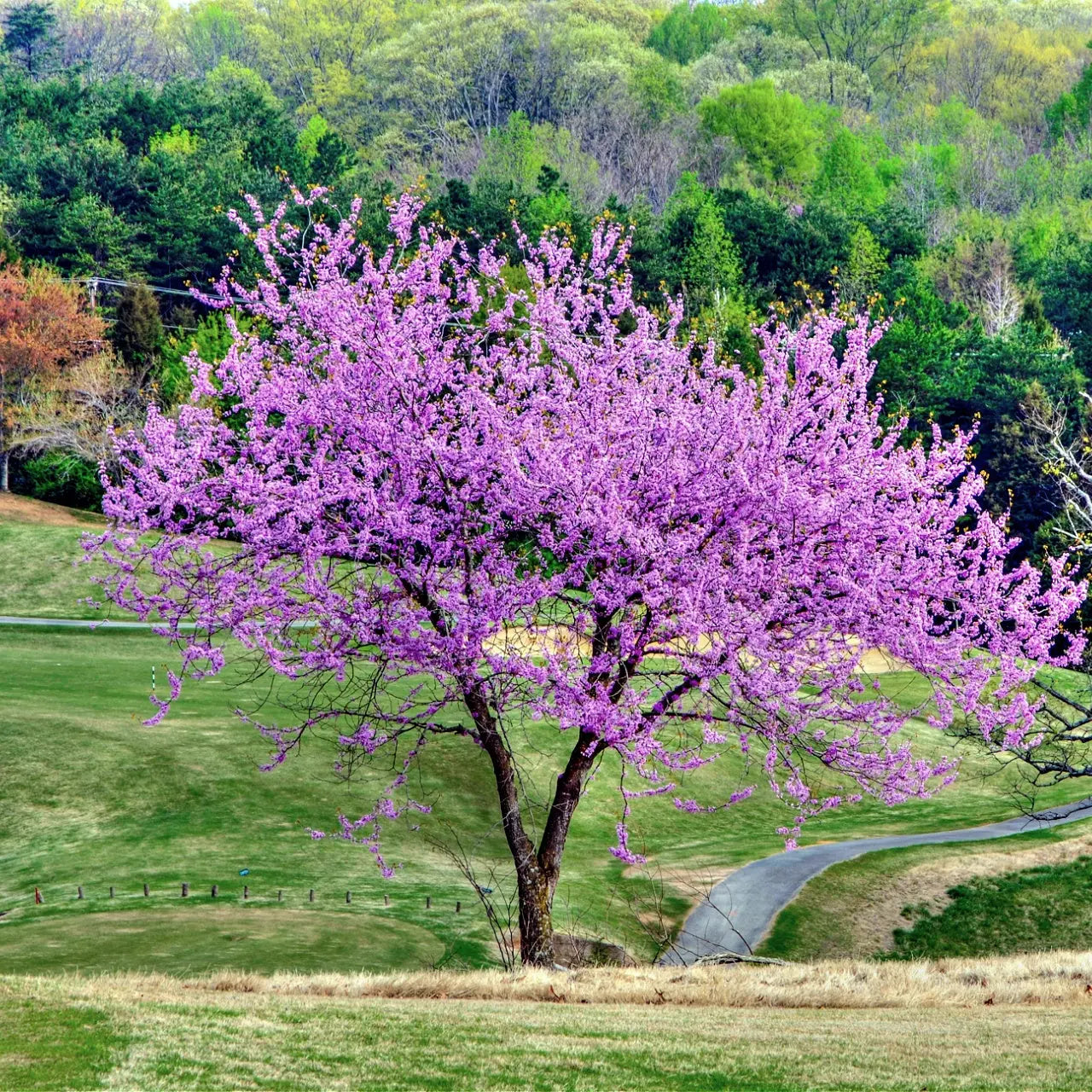
If you’re looking for a tree that truly announces the arrival of spring, it’s hard to beat the Eastern Redbud (Cercis canadensis).
Often called the “harbinger of spring,” this native beauty bursts into bloom before most trees even think about leafing out, covering its branches in a cloud of rosy-pink flowers that instantly brighten the landscape.
Meet the Eastern Redbud
Redbuds are known for their naturally graceful, slightly irregular shape. Their rounded canopy and low-branching habit often create a wide, spreading crown that feels both elegant and a little wild in the best way.
- Shape: Rounded
- Growth Rate: Medium
- Mature Size: 20–30 ft tall × 25–35 ft wide
- Native Range: Eastern United States woodlands
What makes them especially eye-catching is their branching structure. Many redbuds develop multiple trunks or split low to the ground, giving them a sculptural quality that adds year-round interest, even after the blooms are gone.
A Season-by-Season Show
Redbuds don’t just shine in spring, they offer multi-season appeal:
- Early Spring: Branches are lined with clusters of rosy pink flowers, even before leaves appear
- Spring to Summer: Heart-shaped leaves emerge with a reddish tint, maturing to a rich green
- Fall: Foliage turns a soft yellow, adding warm autumn color
- Winter: Unique branching structure provides visual interest
A Boost for Wildlife
Eastern Redbuds aren’t just pretty, they’re incredibly valuable for local ecosystems.
- Early blooms provide nectar for pollinators and early-season butterflies
- Seeds are eaten by birds like chickadees and northern bobwhite
- Branches offer nesting sites and shelter for birds and small mammals
Planting a redbud is a simple way to support wildlife right in your backyard.
Growing Conditions
One of the best things about redbuds? They’re adaptable and easy to grow.
Light
Redbuds thrive in full sun to partial shade. More sun typically means more flowers, but a bit of afternoon shade can help in hotter climates.
Soil
They’re not too picky about soil and can handle:
- Acidic to alkaline pH
- Clay, sandy or loamy textures
The key is well-drained soil that stays moderately moist.
Water
- Water weekly when newly planted, especially when the top few inches of soil dry out
- Once established (after 1–2 years), redbuds become fairly drought-tolerant
Temperature
Hardy in zones 4–8, redbuds are well-suited for Pennsylvania landscapes and much of the U.S.
Care & Maintenance
Redbuds are refreshingly low-maintenance, making them a great choice for both new and experienced gardeners.
Fertilizer
Because they belong to the pea family (Fabaceae), redbuds can fix nitrogen from the air, meaning fertilizer is rarely needed.
Pruning
- Minimal pruning required
- Remove dead or damaged branches anytime
- Shape the tree in late winter before blooming
- Train young trees early if you want a stronger structure or single trunk
Why Choose a Redbud?
If you want a tree that delivers big impact with relatively little effort, the Eastern Redbud checks all the boxes:
- Stunning early spring color
- Native and pollinator-friendly
- Adaptable to many soil types
- Low maintenance once established
- Beautiful structure year-round
Whether used as a focal point, along a woodland edge or as part of a layered landscape, redbuds make a bold yet graceful statement.
Thinking about adding one to your yard? Redbuds are one of those trees that just get better with time. Every spring, they’ll remind you exactly why you planted them.