
Skunks
Skunks in the Yard: Understanding the Benefits, Problems & Humane Solutions
Skunks might not win any popularity contests, but they’re not all bad.
If it weren’t for their strong odor and troublesome habits, skunks could be considered helpful garden visitors. They eat pests, including beetle grubs, grasshoppers, cutworms, mice, rats, rabbits and even the occasional mole. Studies show that only a small portion of a skunk’s diet causes economic harm to people.
That said, skunks can still create major headaches for homeowners. Their spray has an unmistakable odor, they dig up lawns searching for grubs, knock over garbage cans at night and may burrow under porches or sheds.
On rare occasions, they can also carry rabies. Because of these issues, many homeowners look for ways to safely and humanely remove skunks from their property.
Getting to Know Skunks
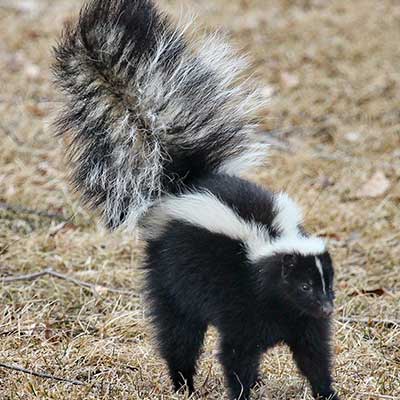
Skunks are medium-sized mammals, about as large as a house cat, with black fur and bushy tails. The most common type in our area is the striped skunk, easily recognized by the white stripe running down its back.
Skunks breed in late winter, and females give birth in May to one litter of four to six young. The babies stay with their mother for their first year. In the wild, skunks typically live three years or less.
Because skunks are nocturnal, it’s rare to see them during the day. In the coldest part of winter, they may remain inactive in underground dens for several weeks at a time. While skunks generally avoid conflict, they will defend themselves if threatened. Warning signs include stamping their front feet and raising their tail. If you notice this behavior, it’s best to calmly back away.
Skunks usually live near wooded areas, but in neighborhoods they often take shelter under decks, sheds, porches or in brush piles. Their tracks are easy to identify, as both front and back feet have five clawed toes.
How to Handle Skunk Odor
If a skunk sprays a person, pet or property, diluted vinegar or diluted tomato juice can help reduce the smell. Clothing may need to be soaked in bleach or ammonia solutions. Acting quickly helps prevent the odor from lingering.
Dealing with Skunks Humanely
Live trapping is one of the most effective and humane ways to manage skunks. Metal live traps are widely available and easy to use. Covering the trap with a blanket can help calm the animal and reduce the chance of spraying. Traps should be placed near areas where skunks are active, such as den entrances or frequently dug spots.
Fish-flavored cat food, peanut butter, or canned sardines make effective bait. Once a skunk is captured, it should be released far from residential areas, following local wildlife regulations. Your state game commission can provide guidance on legal and appropriate release locations.
If you discover a den opening, it’s important to seal it after the skunk has left to feed at night. Materials such as wire mesh, sheet metal, or concrete work well. For skunks trapped in garages, sheds, or window wells, leaving a clear exit or placing a ramp usually allows them to leave on their own.
Preventing Future Problems
The best long-term solution is to remove what attracts skunks in the first place. Lawns with beetle grubs are a major food source. Grubs can be managed with treatments like Milky Spore or seasonal insect controls applied in mid-summer.
Keep garbage tightly sealed in sturdy cans, clean up brush and woodpiles, and remove other hiding spots around your yard. Skunks are less likely to stay where food and shelter are limited.
Repellents are generally less effective for skunks, as few smells bother them. Mothballs or ammonia-soaked sponges may help in enclosed spaces, but results vary. Noise and scare devices usually work only temporarily. Having a dog can sometimes discourage skunks from settling in the area.
When to Call a Professional
If skunks persist or if you’re uncomfortable handling the situation yourself, professional wildlife control services are available. These experts can safely trap and remove skunks while following local laws and safety guidelines.
With the right approach, skunks can be managed in a way that protects your home and garden while respecting the role they play in the ecosystem.