
- Home
- Insects
Stink Bugs
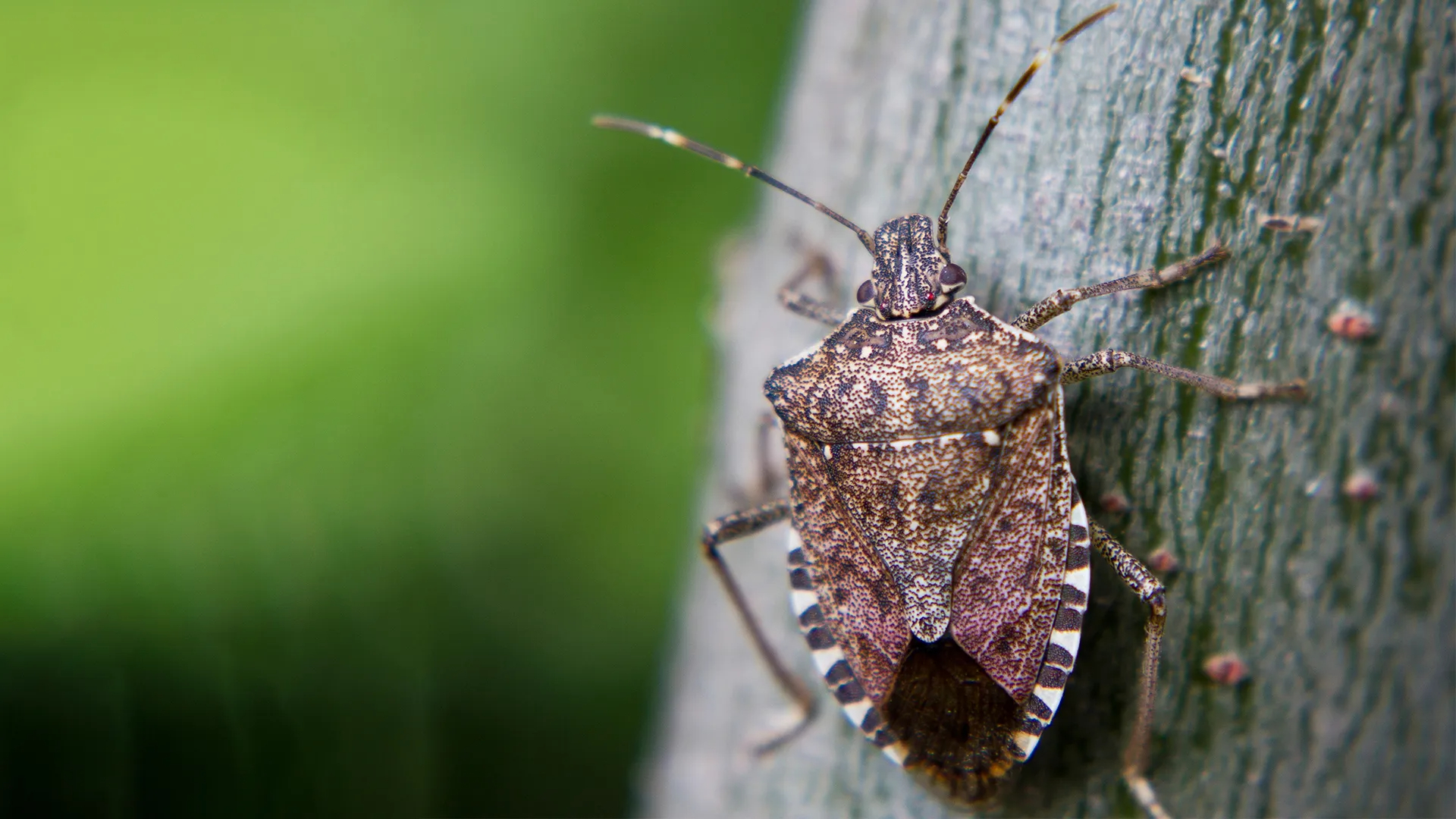
Stink Bugs: What to Know and How to Prevent Them
The brown marmorated stink bug has become a common nuisance in late summer and fall throughout Pennsylvania. Native to parts of Asia, this insect was first discovered in eastern Pennsylvania in the late 1990s and has steadily spread across surrounding regions.
Adult stink bugs are shield-shaped and typically measure about half an inch to three-quarters of an inch long. They are mottled brown with light and dark bands along the edge of their body. When disturbed or crushed, they release a strong odor from scent glands, which is how they earned their name.
Stink bugs do not bite or damage homes, but they can harm fruits and vegetables. Using piercing mouthparts, they feed by sucking juices from plants. While they rarely consume large portions of crops, their feeding can cause scarring, deformities and rotting, making produce less appealing or unusable.
In Pennsylvania, stink bugs usually produce one or two generations each summer. As temperatures cool in late summer and fall, adults begin searching for sheltered places to overwinter. They often enter homes through small openings around windows, doors, siding and screens. Although they may become a household nuisance, they do not reproduce indoors.
The best way to manage stink bugs is prevention. Sealing cracks, repairing screens and installing weather stripping before fall can help keep them from entering buildings and reduce indoor infestations.