
Hyacinths
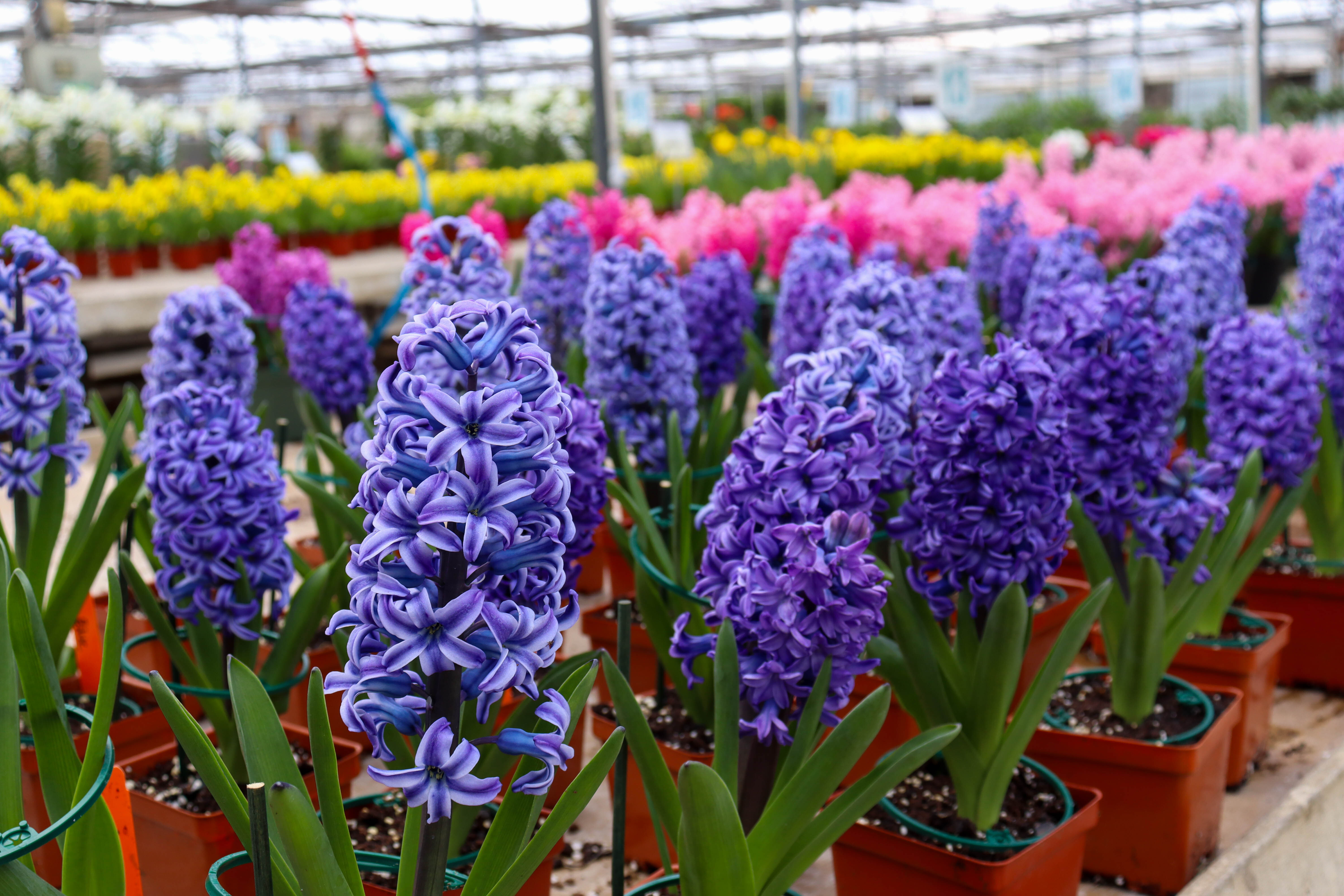
Few flowers signal the arrival of spring like hyacinths. Known for their bold color and sweet fragrance, they bloom alongside daffodils and early tulips, making them a beautiful addition to mixed spring plantings.
Hyacinths grow about 10 inches tall and are popular for borders and garden beds because of their neat shape and vibrant blooms. They are also deer resistant and grow well in Zones 4–9. As an added bonus, hyacinth bulbs can be forced to bloom indoors months before they flower outside.
Planting Hyacinth Bulbs Outdoors
Plant hyacinth bulbs in the fall to enjoy colorful, fragrant blooms in early spring. A little preparation helps ensure strong, healthy plants.
Before Planting
Start by loosening the soil so roots can grow easily. Mixing in compost or bonemeal helps improve soil fertility and supports strong blooms.
When to Plant
Plant bulbs in the fall before the first hard frost while the soil is still workable.
How to Plant
- Plant bulbs about 4 inches deep and at least 3 inches apart
- In colder climates like Zone 4, plant bulbs slightly deeper at 6–8 inches
- Choose a location with well-drained soil
- Full sun to partial shade produces the best blooms
- Plant bulbs with the pointed end facing up, cover with soil, and water thoroughly
Helpful Tips
Hyacinth bulbs contain oxalic acid, which can irritate skin, so wearing gloves when handling them is recommended. Good drainage is important since hyacinths do not tolerate soggy soil. These flowers work beautifully in borders, rock gardens, and even as cut flowers for indoor arrangements.
Planting Easter Hyacinths Outdoors
Potted hyacinths are a popular spring and Easter decoration. After enjoying them indoors, you can plant them outside for blooms in future years.
When to Plant
Move plants outdoors once the flowers fade.
Why It Works
While the blooms are delicate, the foliage is hardy and can tolerate early spring weather.
Planting Tip
Plant them using the same steps as fall-planted bulbs. Be sure to leave the leaves intact after flowering since they help store energy for next year’s blooms.